
History of Port Vell, Barcelona
For centuries, Port Vell — meaning “Old Port” — has been the link between Barcelona and the sea. In medieval times, it was a simple anchorage where fishermen and merchants gathered, but without real infrastructure to protect ships from storms.
During the 19th century, the port began to modernize with new docks, cranes, and rail connections, supporting the city’s growing industrial trade. However, for a long time, the waterfront remained closed to the public, used only for commercial and industrial purposes.
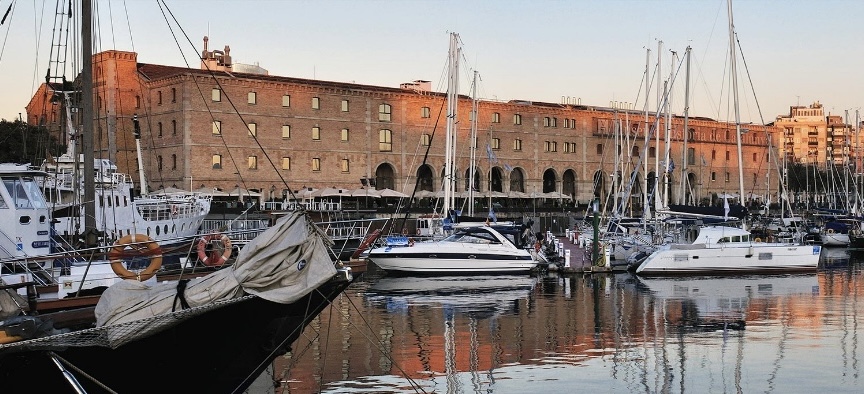
Everything changed in the 1980s, when the Moll de la Fusta was redesigned into a public promenade. This transformation opened the port to citizens for the first time in decades, reconnecting Barcelona with its maritime identity.
The real rebirth came in the early 1990s, when the city prepared for the Olympic Games. Port Vell was redesigned into a lively urban waterfront, combining history, leisure, and culture. Modern spaces like Maremagnum and L’Aquàrium were built, and the once industrial docks became a welcoming space for everyone.
Today, Port Vell represents the evolution of Barcelona itself — from a working harbor to a vibrant meeting point between the city, the sea, and its people.